News > Ebola: Rapid response to the Bundibugyo virus outbreak in the DRC and Uganda
Ebola: Rapid response to the Bundibugyo virus outbreak in the DRC and Uganda
By the Pathoplexus Team - 19 May 2026
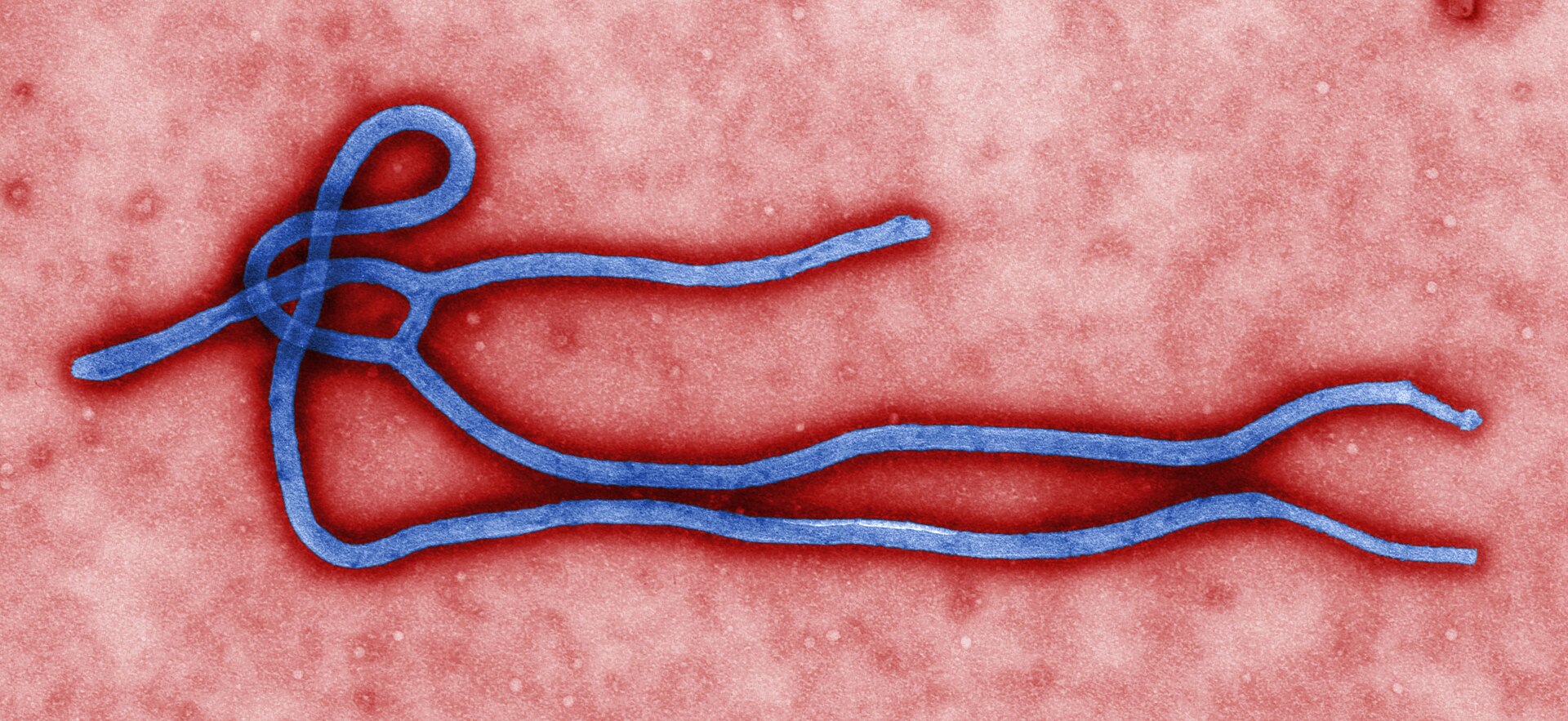
Colorized transmission electron micrograph of an ebolavirus virion
In response to the current Ebola outbreak in the Democratic Republic of the Congo (DRC) and Uganda, Pathoplexus has added support for Bundibugyo virus (BDBV), an orthoebolavirus known to cause severe Ebola disease in humans. This addition is in response to reports from the health authorities in the DRC and Uganda identifying BDBV as the virus responsible. Adding BDBV to Pathoplexus provides a dedicated space for researchers, public health laboratories, and response teams to submit, search, download, and analyse Ebola Bundibugyo genomic data. Pathoplexus already hosts datasets for Zaire ebolavirus and Sudan ebolavirus, and was used to share data from outbreaks of both species in 2025.
Following the confirmation of a BDBV outbreak in concurrent announcements by public health authorities in the DRC and Uganda on 15 May, genomic surveillance efforts have been rapid. Outbreak teams in both countries have already shared the first near-complete BDBV genomes from the current outbreak through Pathoplexus: one generated by Uganda’s Central Public Health Laboratories and two generated by the INRB in Kinshasa. These sequences are available under Restricted Use terms with accession numbers PP_006XHL9, PP_006XHKB, and PP_006XCJJ, supporting public health use while the generating teams continue their analyses.
The two countries are collaborating closely, both in analyses and in outbreak response. In a jointly-authored Virological post, the authors report that phylogenetic analysis of these genomes alongside historical BDBV genomes from the 2007 Uganda and 2012 DRC outbreaks is consistent with the current outbreak representing a new spillover event.
Background
This data is crucial to understanding the outbreak. On 16 May 2026, WHO determined that the situation constitutes a Public Health Emergency of International Concern (PHEIC). WHO reported that the outbreak was first flagged on 5 May in Mongbwalu Health Zone, Ituri Province, DRC, with laboratory confirmation of Bundibugyo virus disease in samples tested by INRB Kinshasa on 15 May; Uganda also confirmed an imported case.
Bundibugyo virus disease is a severe and often fatal form of Ebola disease. As with other Ebola diseases, rapid genomic data sharing can help support outbreak response by enabling comparison of newly generated sequences with historical data, assessment of introductions and onward transmission, and more coordinated analysis across laboratories and public health teams. Pathoplexus currently hosts 47 Ebola Bundibugyo sequence entries, including 44 historical sequences from Uganda and the Democratic Republic of the Congo, as well as the three sequences currently available from the 2026 outbreak.
Data sharing
As with other organisms, Ebola Bundibugyo data can be shared as Open immediately or under Restricted-Use terms for up to 1 year before becoming Open. Restricted-Use data remains available for public health and research use, while protecting the attribution and publication opportunities of the teams who generated the data. All Open data is sent on to INSDC-member databases.
We encourage all users working with newly submitted outbreak-related sequences to read and follow the Pathoplexus Data Use Terms carefully, and to cite Pathoplexus SeqSets and DOIs when using data from the platform.
We thank the laboratories, clinicians, field teams, public health authorities, and communities involved in the response, and we hope that adding Ebola Bundibugyo to Pathoplexus will support rapid, responsible, and equitable genomic data sharing for the current outbreak and for future preparedness.
Explore Ebola Bundibugyo data on Pathoplexus: pathoplexus.org/ebola-bdbv